How to Make Portals in Minecraft
Table of Contents
I rebuilt my first Nether portal three times because I kept getting the frame backwards, tall where it should’ve been wide. It still worked once I got obsidian into a rectangle, but it looked wrong for weeks before I bothered fixing it. This guide on how to make portals in Minecraft covers both portal types the right way the first time. Exact dimensions, obsidian counts, activation, and the coordinate math that decides whether your two portals actually connect where you expect.
Nether Portal: The Exact Size
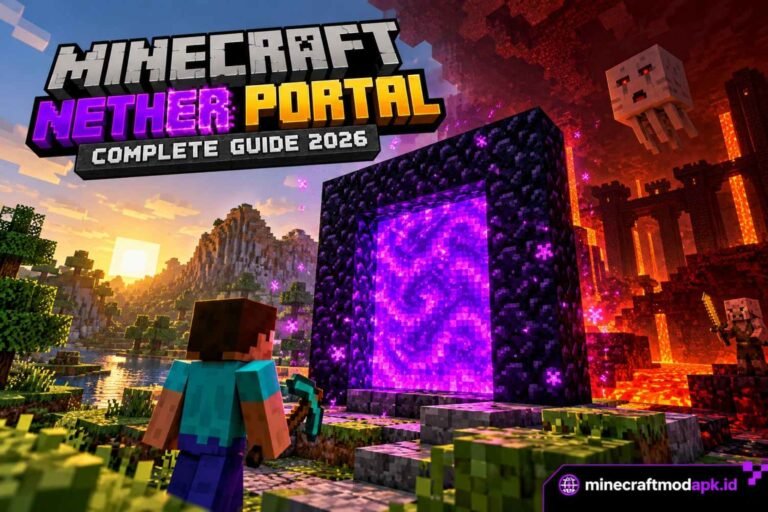
A Nether portal frame is 4 blocks wide and 5 blocks tall on the outside, with a 2×3 opening in the middle where the purple effect appears. Building it backwards, 5 wide and 4 tall, is a common mistake. Check the numbers before you start placing blocks.
The four corner blocks aren’t actually required. The true minimum is 10 obsidian, arranged as two 4-block-tall side columns connected by a 2-block top and bottom. Add the corners for a clean rectangle and you’re at 14. You can also build bigger, up to 23×23 on the outside, though there’s no functional reason to go past the minimum unless you want room for a horse, boat, or minecart to pass through.
Getting the Obsidian (Without Mining, If You Want)
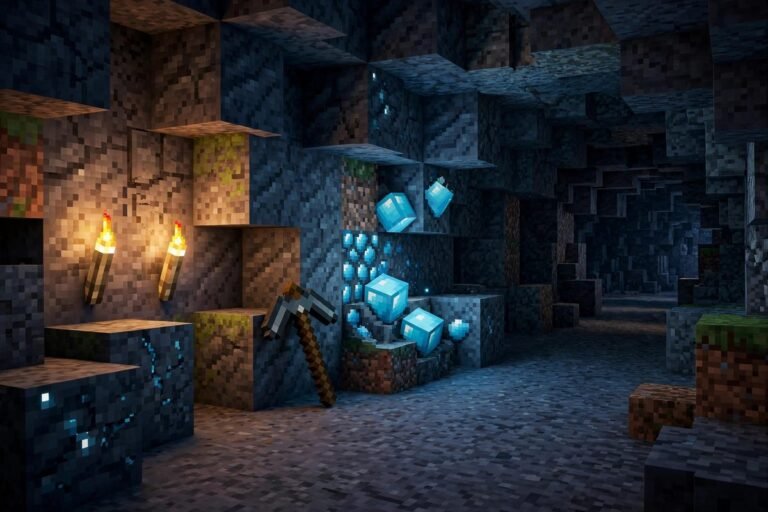
Obsidian forms whenever water touches a lava source block. You don’t need a diamond pickaxe to build a portal. Pour water over lava to cast the obsidian in place, block by block, and you’ve got a frame without mining a single piece. It’s slower than mining pre-formed obsidian, but it works if you haven’t found a diamond pickaxe yet.
If you are mining it, a diamond or netherite pickaxe is required. Nothing weaker will drop the block.
Lighting the Portal
Once your frame is complete, craft flint and steel (1 iron ingot plus 1 flint, made from breaking gravel) and use it on any block inside the frame. The interior turns into a swirling purple surface almost immediately. Walk in, and after a short delay you’ll be pulled into the Nether. It’s the simplest step in learning how to make portals in Minecraft: one click, and the way to the Nether is open.
Ruined Portals: A Faster Shortcut
Before you commit to mining or casting a full frame, check your surroundings for a ruined portal. These generate naturally in both the Overworld and the Nether, in almost every biome, and they’re already partway built. Often only 2 to 6 obsidian blocks are missing from the frame, which means you can finish one in a fraction of the time it takes to build from scratch.
Two things to watch for. First, loose obsidian is usually scattered on the ground around the structure, so grab that before you go looking elsewhere. Second, some of the frame blocks might be crying obsidian instead of regular obsidian. It looks almost identical, with faint purple particles as the giveaway, but it can’t hold a portal. Swap any crying obsidian out for the regular kind before you try to light it, or the frame simply won’t activate.
Ruined portals also generate with a loot chest nearby, and it’s worth checking before you move on. The chest commonly holds obsidian, gold items, and flint and steel, occasionally something better. Finding one early can save you an entire mining trip.
Linking Two Portals Correctly
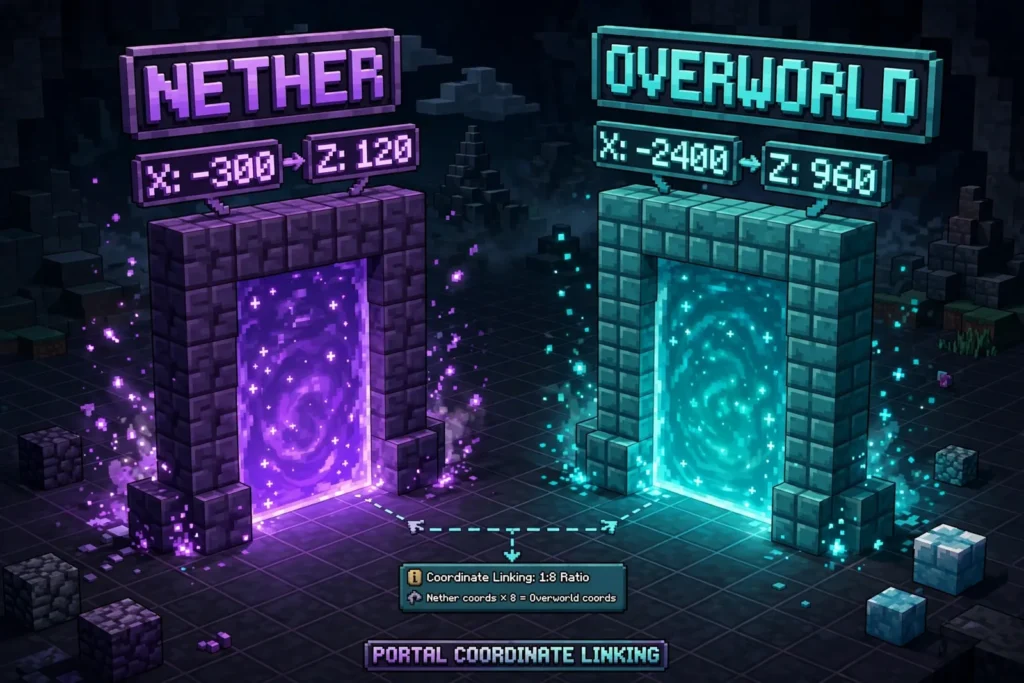
Most beginner guides skip this part, and it’s the reason people sometimes end up in the wrong spot after stepping through. Nether coordinates are your Overworld coordinates divided by 8. If your Overworld base sits at X:800, Z:1600, your Nether portal needs to be built at roughly X:100, Z:200 to link back to the same location.
When you step through a portal, the game searches for an existing portal within 128 blocks in the Nether, or 1024 blocks in the Overworld. If nothing’s found in range, it generates a brand new portal instead of connecting to the one you built. That’s usually why people find themselves in an unfamiliar spot on their first trip back. Building your Nether-side portal at the exact converted coordinates avoids this.
End Portal: You Probably Need Fewer Eyes Than You Think
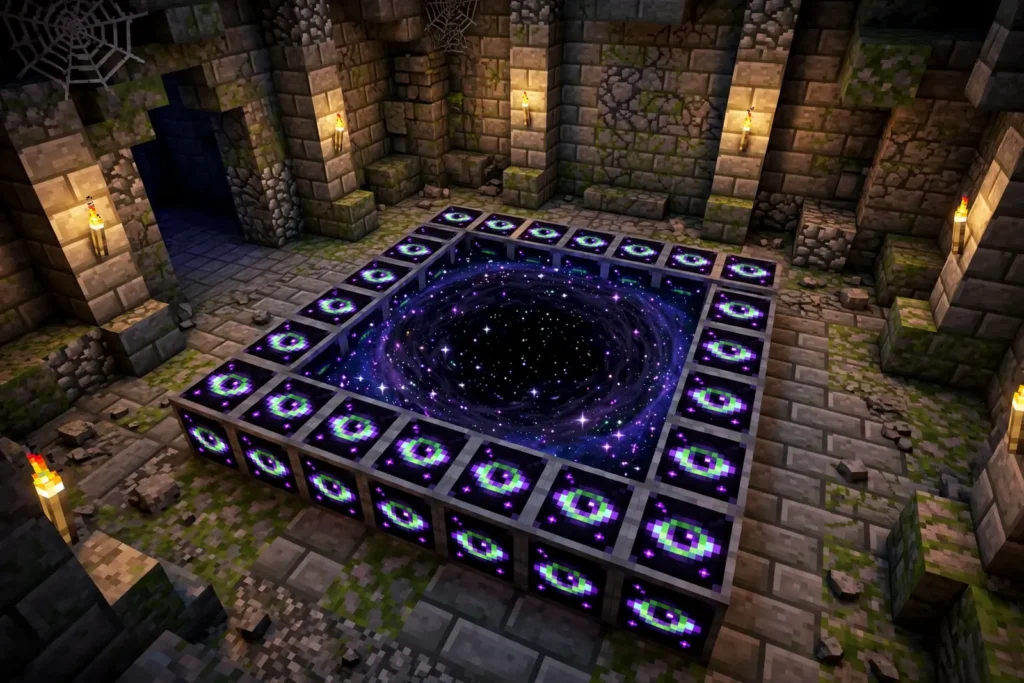
Unlike the Nether portal, you can’t build an End Portal from scratch in survival. End portal frame blocks don’t exist as an obtainable item outside creative mode. Instead, you find one already generated inside a stronghold and activate it.
The portal ring is made of 12 end portal frames, and each individual frame has a 10% chance of generating with an Eye of Ender already sitting in it. Do the math across all 12, and the average stronghold needs only about 11 eyes supplied by the player, not the full 12. Some rooms come with two or three already filled, occasionally more.
Bring more than the bare minimum anyway. Throwing an Eye of Ender to locate the stronghold carries roughly a 20% chance the eye shatters instead of landing safely, so a good chunk of whatever you’re carrying gets used up just finding the place. Most experienced players bring 15-20 total to cover both the search and the frame itself.
How to Find and Activate It
- Craft Eyes of Ender (1 ender pearl + 1 blaze powder).
- Throw one into the air and follow the direction it flies.
- Keep throwing and following until an eye flies downward instead of forward. That means you’re above the stronghold.
- Dig down carefully until you reach the structure, then navigate to the portal room.
- Place an Eye of Ender into each empty frame by using it while facing the block.
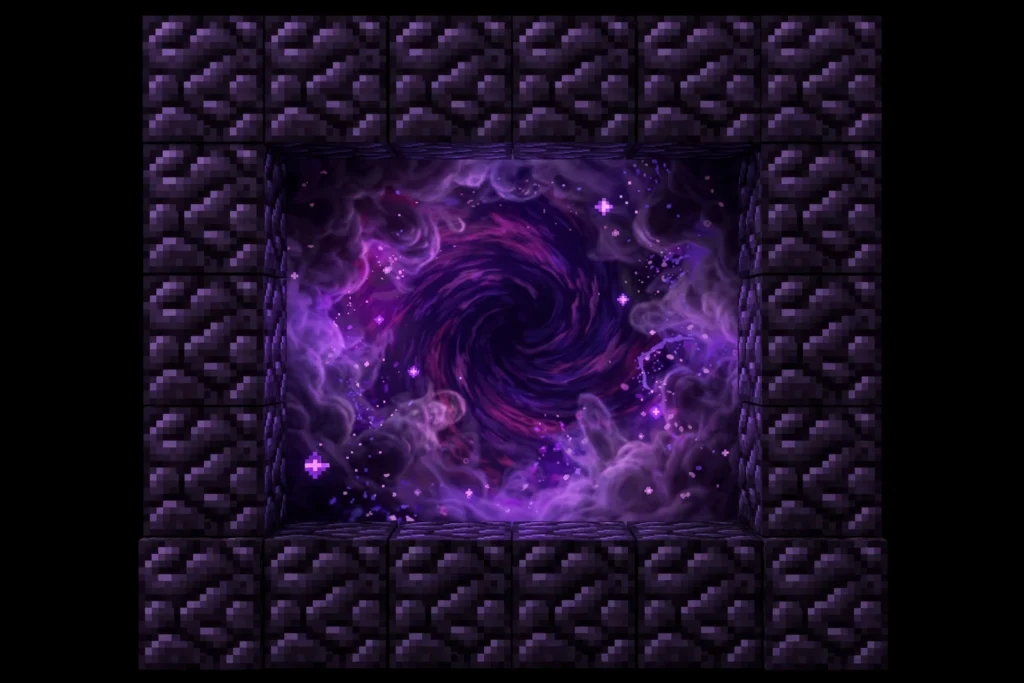
- Once every frame is filled, the portal activates and the interior fills with the black starfield effect.
How to Make Portals in Minecraft: Safety Tips for Both Portals
- Build in an enclosed space, not out in the open. Mobs can walk through an active portal just like a player can, and an unprotected one near a mob spawn area can bring unwanted company with it.
- Avoid flammable blocks like wood or wool right up against a Nether portal frame. Keep at least a small gap or use stone-based materials nearby.
- Light the surrounding area so nothing spawns right next to your arrival point on either side.
- Once you step into the End through a stronghold portal, there’s no easy way back until you either defeat the Ender Dragon or find the exit portal it leaves behind. Pack accordingly before you go in.
Frequently Asked Questions
How much obsidian do I need for a Nether portal?
10 blocks minimum, using a frame without corners. A full rectangle with corners takes 14.
Can I build an End Portal in survival mode?
No. End portal frame blocks aren’t obtainable outside creative mode. You have to find a naturally generated one in a stronghold.
How many Eyes of Ender do I actually need?
On average around 11, since each of the 12 frames has a 10% chance of already containing one when the stronghold generates. Bring 15-20 total to cover eyes that shatter while searching.
Why did my portal send me to the wrong place?
Nether coordinates are your Overworld coordinates divided by 8. If no portal exists within 128 blocks (Nether side) or 1024 blocks (Overworld side) of the converted location, the game builds a new one instead of linking to yours.
Do I need a diamond pickaxe to get obsidian?
No. Pouring water over a lava source block creates obsidian you can then break with any pickaxe tier of diamond or higher. You can also build the frame by casting it directly without mining pre-existing obsidian at all.
What is a ruined portal, and is it faster than building one?
A ruined portal is a naturally generated, partially broken Nether portal frame found in both the Overworld and the Nether. Usually only a few obsidian blocks are missing, so repairing one is faster than building from scratch. Just check for crying obsidian in the frame first and swap it out, since crying obsidian can’t hold an active portal.
Final Thoughts
Both portals come down to getting a specific shape right and understanding what activates it. Flint and steel for the Nether, Eyes of Ender for the End. The frame size and the coordinate math are where most mistakes happen. Get those two details right and the rest of the process is simple. Once you can build both from memory, you truly know how to make portals in Minecraft.

4 Comments