
Minecraft Sulfur Cube: All Archetypes, Blocks & What I Learned Feeding It TNT
The first time I ran into a Minecraft Sulfur Cube, I had no idea what I was looking at. I was digging through an unfamiliar cave when the walls suddenly turned yellow and red, and this bouncing, cube-shaped mob was hopping around near a wall of glowing crystal.
That was my first look at the Sulfur Caves biome, and at the Minecraft Sulfur Cube itself — one of the more unusual additions from Minecraft’s Chaos Cubed update. The biome already looks nothing like the caves most players are used to, but the cube gets a lot more interesting once you start feeding it different blocks.
In this guide, I’ll cover what Sulfur Caves look like, how the block-absorption mechanic works, all 12 Minecraft Sulfur Cube archetypes, and what I learned after a few play sessions messing around with one.
Documented from a Java Edition 26.2 world generated after the Chaos Cubed update — every mechanic below was tested directly, not pulled from patch notes alone.
On this page: What Is the Chaos Cubed Update? · What Are Sulfur Caves? · Sulfur Caves Hazards · Sulfur & Cinnabar Building Blocks · Meet the Sulfur Cube · All 12 Archetypes · Breeding and Growth · The TNT Archetype · How to Find Sulfur Caves · What It’s Good For · FAQ
What Is the Chaos Cubed Update?
Chaos Cubed is the update that added Sulfur Caves and the Sulfur Cube. It released as Java Edition 26.2 and Bedrock Edition 26.30 on June 16, 2026, after the mob was first shown off at Minecraft Live back in March 2026 — so if the name sounds familiar even though you haven’t found one yet, that’s probably why.
This isn’t a snapshot-only feature either. Chaos Cubed is fully live, so you don’t need an experimental build — just explore chunks generated after the update.
The drop brought a few other small additions alongside the headline mob and biome, including a new music disc called “Bounce” — you’ll find it in minecart chests inside mineshafts that spawn within Sulfur Caves.
What Are Sulfur Caves?
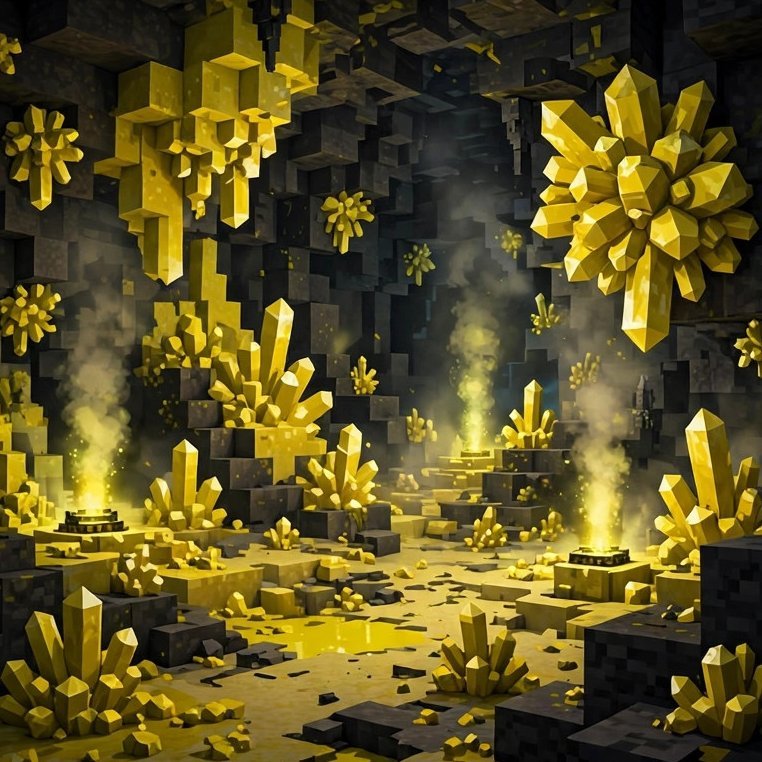
Sulfur Caves are underground biomes built around sulfur and cinnabar instead of the usual stone and gravel. They’re easy to recognize once you’ve seen one: bright yellow sulfur formations against deep red cinnabar walls, with sharp sulfur spikes lining the floors and ceilings. The color palette is probably the first thing you’ll notice.
One detail I didn’t expect: cave spiders spawn here instead of regular spiders, so if you’re exploring solo, bring poison resistance just in case.
One catch if you’re searching an older world: Sulfur Caves only generate in new chunks, and existing terrain doesn’t update itself after the fact. If you’ve already explored the caves around
your base, you’ll need to head into unexplored territory to find one.
Sulfur Caves Hazards You Need to Know
Sulfur Caves look striking, but a few things in here can actually hurt you if you’re not paying attention.
Potent Sulfur pools. Scattered through the biome are pools of water sitting on top of a block called Potent Sulfur. It constantly vents a noxious yellow gas into the water above it, and stepping into that water gives you Nausea — the same warped-screen effect, just from a block instead of a potion. It doesn’t do damage on its own, but Nausea at the wrong moment (next to lava, mid-fight with a cave spider) can get you killed indirectly. The fix is simple: carry a bucket of milk. Drinking it clears the effect instantly, so keep two or three in your hotbar before you head in.
Geysers. If Potent Sulfur has a magma block underneath it and shallow water above, it erupts into a geyser that launches anything standing in the water straight up, with no fall damage. One thing to note: these don’t occur naturally inside the underground cave pools, since those don’t generate with a magma block underneath. You’ll only find natural geysers on the surface, as part of a Sulfur Spring — though nothing stops you from building your own underground the same way.
Sulfur Springs — your surface shortcut. This one’s also the easiest way to find the biome without digging blind. A Sulfur Spring is a small surface pond ringed with sulfur, cinnabar, and sulfur spikes, and it always sits directly above a Sulfur Caves biome. If you spot bubbling water with yellow gas drifting off it while exploring the overworld, dig straight down — you’ll hit the cave underneath.
Sulfur Spikes. These aren’t just decoration. They grow slowly over time, hanging from sulfur blocks like stalactites, and can eventually break off and fall. Get hit by a falling one and it deals real damage, so glance up before you set up camp under a dense cluster. On the plus side, they’re a renewable resource — a stonecutter turns one spike back into sulfur, and Wandering Traders will occasionally sell two spikes for an emerald if you’d rather not mine them yourself.
New Sulfur & Cinnabar Building Blocks
Sulfur and cinnabar aren’t just cave scenery — Chaos Cubed added full building sets for both.
Each one comes with the usual range of variants: a base block, polished and chiseled versions, plus stairs, slabs, and walls, all craftable at a crafting table or cut faster at a stonecutter. Cinnabar in particular fills a color gap a lot of builders have wanted for a while — a warm, deep red that works well for roofs, brick detailing, or anything you’d otherwise reach for red terracotta or nether brick to build.
If you’re planning to grab a stack of these for a build, bring a stonecutter down into the cave with you. Cutting stairs and slabs on the spot saves a lot of back-and-forth inventory trips.
Meet the Minecraft Sulfur Cube
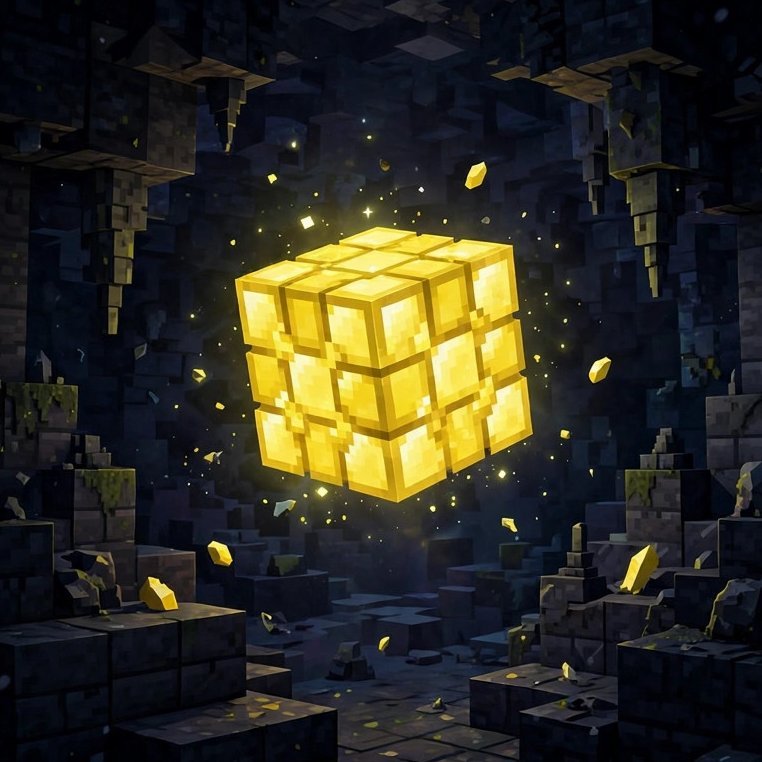
The Minecraft Sulfur Cube is a passive, slime-like mob that spawns naturally in Sulfur Caves, usually in small groups of two to four. It can also spawn at any light level — despite what some early guides claimed, it doesn’t need total darkness.
Left alone, a Sulfur Cube mostly just bounces around aimlessly. It isn’t aggressive, it doesn’t attack players, and in its normal state it’s vulnerable to any source of damage. It can also pathfind into climbable blocks like ladders and vines — the first time one climbed up a shaft I’d built, I lost track of it completely.
The real reason it stands out, though, is the absorption mechanic — and only large Sulfur Cubes can use it. Small cubes can’t absorb anything, no matter what you try to feed them.
There are three ways to feed a large cube: drop a full-sized block near it, feed it directly by interacting with it, or — a method redstone builders tend to appreciate — launch a block at it from a dispenser.
Once the cube absorbs a block, it becomes immobilized and takes knockback instead of damage from most attacks. The block it’s holding then changes its behavior: its bounce, how much it slides, how much it drifts through the air, and in some cases whether it floats on water at all.
You can get the block back out again in three ways — shear it (which also puts the cube on a roughly five-second cooldown before it can absorb again), feed it a different block to replace the one it’s holding, or kill it outright. For redstone builds, a dispenser loaded with shears can strip a cube’s block automatically, the same way a dispenser can feed it one — so a fully hands-off system that swaps a cube’s archetype on command is entirely possible.
Not every block works, though. Slabs and stairs can’t be absorbed — I assumed they’d behave like full blocks and learned otherwise. Non-solid blocks like glass, leaves, and flowers are out too, along with functional blocks like furnaces and crafting tables.
One more detail if you plan on keeping a cube around: a name tag sticks even after the cube splits into small cubes or gets scooped into a bucket, so you won’t lose track of one you’ve grown
attached to.

Minecraft Sulfur Cube Archetypes: What Each Block Does
This is the heart of the mob. Feeding a Minecraft Sulfur Cube a block can change four things — how bouncy it is, how much it slides, how much it drifts through the air, and whether it floats on water.
There are 12 archetypes in total. A few older guides list 10 or 11, but those numbers came from earlier snapshot builds or simply missed the explosive archetype — the current game data confirms 12 named archetypes, plus the normal state for a cube holding nothing.
Here’s how each one breaks down:
| Archetype | Blocks That Trigger It | Bounce | Slide | Floats? |
|---|---|---|---|---|
| Bouncy | Planks, logs, bamboo, stripped wood | High | Low | Yes |
| Light/Beach Ball | Any wool | High | Low | Yes, drifts gently |
| Regular | Dirt, grass, mud, clay, concrete powder, coal block, bone block | Medium | Low | Yes |
| Slow Bouncy | Stone, deepslate, ores, bricks, terracotta, concrete, purpur, quartz | Medium | Low | No |
| Slow/Heavy | Iron, gold, copper, netherite blocks, ancient debris | Low | Low-medium | No |
| Fast/Slick | Coral, sponge, kelp, moss, pumpkin, melon, froglights, resin | Medium | Low | No |
| Sliding/Icy | Blue ice, packed ice, snow block | Very low | Very high | No |
| Slow Sliding | Mushroom blocks, mycelium, nether wart block, shroomlight | Very low | Very high | No |
| High Resistance | Soul sand, soul soil | Low | Almost none | No |
| Sticky | Honeycomb block | None | Almost none | No |
| Explosive | TNT | Medium | Low | Yes |
| Hot | Magma block | Medium | Low | Yes |
A few archetypes stand out. Wool gives the cube the most air drag of any block, so it’s the closest thing to a floating cube. Honeycomb does almost the opposite — it kills nearly all of its momentum, so it basically freezes wherever it lands, which is handy if you want one as still decoration. And the ice-family blocks (blue ice, packed ice, snow) have almost no friction, so a cube fed one of those will slide across flat ground for a surprisingly long time.
Breeding and Growth
Sulfur Cubes don’t breed in the traditional sense, but they do have a growth system.
When a large Sulfur Cube dies, it normally splits into two smaller ones — similar to how slimes and magma cubes behave — unless it was killed by a TNT explosion, in which case it doesn’t split at all.
Small Sulfur Cubes can grow back into large ones over time, roughly 20 minutes by default. It’s the closest thing this mob has to a breeding mechanic, and watching a tiny cube slowly bulk back up is oddly satisfying.
Slimeballs speed that growth up. A golden dandelion does the opposite — it permanently halts growth, locking the cube small until you feed it a second golden dandelion to let it resume aging. So if you’re trying to grow a collection of large cubes faster, slimeballs are what you want; if you’re keeping a small one around for decoration, the golden dandelion is what freezes it in place.
Large Sulfur Cubes are also bucketable, so if you find one you like, you can scoop it up and move it to a base, farm, or redstone setup instead of leaving it in the caves.
The TNT Archetype — Handle With Care
This one deserves its own section, because it’s easy to miss and important to know before you try it.
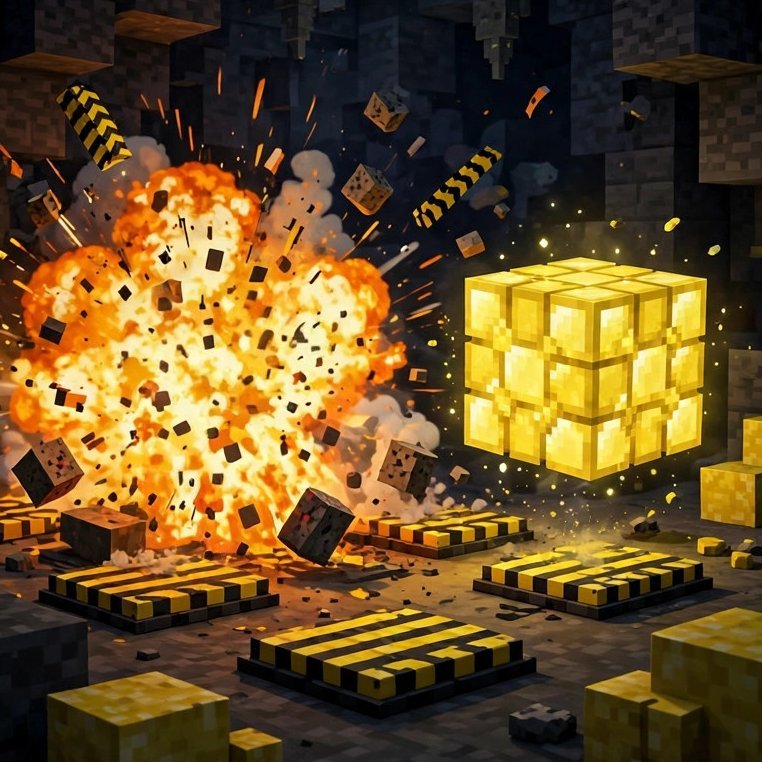
Feed a Minecraft Sulfur Cube a TNT block and it becomes a live explosive — doing so also unlocks the game’s “Uh Oh” advancement. Once it’s absorbed the TNT, the fuse depends entirely on how it’s set off:
- Fire, flint and steel, or redstone — a 6-second fuse, same as priming a normal TNT block by hand.
- A nearby explosion — this is the one people miss. If another explosion goes off close enough to trigger it, the fuse drops to a random 0.75 to 3 seconds. That’s fast enough that you may not have time to get clear if you’re chain-detonating cubes or working near other TNT.
Once it’s primed, that’s final — you can no longer bucket it away or safely remove the TNT with shears. It’s a legitimate demolition tool if you want a mobile, movable bomb, but it’s also the one archetype where a casual mistake near your base can go badly. Don’t feed a Sulfur Cube TNT unless you’re ready for it to actually go off, and don’t assume you’ll always get the full six seconds to react.
How to Find Sulfur Caves
There’s no fixed trick beyond digging into new terrain and paying attention to color changes underground. A few things that have worked for me:
- Explore chunks you haven’t loaded before. Old worlds won’t generate the biome retroactively, so pre-update caves stay exactly as they were.
- Watch for a color shift. The yellow and red palette stands out sharply against normal stone and deepslate, even from a distance with a torch.
- Use the locate command if you have cheats enabled. It’s the fastest way to confirm a nearby biome instead of digging blind.
- Keep an escape route in mind. Cave spiders here can poison you, and the terrain tends to be uneven with more frequent lava pools than standard deep caves.
If you’re deep underground and suddenly start seeing yellow and red blocks, take a closer look — you may have just found one.
What the Minecraft Sulfur Cube Is Actually Good For
It’s not a resource farm or a combat pet — it’s closer to a physics toy, and that’s exactly where it becomes useful.
Redstone builders and minigame designers get the most out of it, using the archetype table above to build bounce pads, sliding puzzle rooms, marble-run style contraptions, or a rolling TNT trap fed by a dispenser. For a normal survival player, it’s more of a fun discovery than something you need to progress — you don’t need one to finish the game, but if you stumble across one while exploring, spend a few minutes experimenting with it.
Feed it wood. Try wool. Put one on ice. Then, if you’re feeling brave, feed it TNT — just make sure you’re standing somewhere safe first. That’s where this mob gets a lot more interesting than
it first appears.
Frequently Asked Questions
What update added the Sulfur Cube in Minecraft?
The Sulfur Cube and Sulfur Caves biome were added in Chaos Cubed, released as Java Edition 26.2 and Bedrock Edition 26.30 on June 16, 2026, after first being revealed at Minecraft Live in March 2026.
Is the Minecraft Sulfur Cube dangerous?
Normally, no — it’s a passive mob that doesn’t attack players and stays vulnerable to damage in its default state. After absorbing a block, it becomes immobilized and takes knockback instead of damage from most attacks. The TNT archetype is the one real exception.
How many archetypes does the Minecraft Sulfur Cube have?
Twelve, each tied to a different category of block — everything from bouncy wood to slippery ice to an explosive TNT archetype.
Can Sulfur Cubes absorb any block?
Only large cubes can absorb blocks at all — small cubes can’t be fed anything. Large cubes can absorb most full-sized blocks, but not slabs, stairs, or non-solid and functional blocks like glass or furnaces.
How do I get a block back out of a Sulfur Cube?
Use shears on it (this also starts a short cooldown before it can absorb again), feed it a different block to replace the one it’s holding, or kill it — it’ll drop the absorbed block as an item either way.
Do Sulfur Cubes breed?
Not in the traditional sense. Small cubes split off when a large one dies — unless it was killed by a TNT explosion — and grow back into large cubes on their own after about 20 minutes. Slimeballs speed that growth up; a golden dandelion halts it completely until you feed the cube a second one.
What happens if I feed a Minecraft Sulfur Cube TNT?
It becomes an explosive and unlocks the “Uh Oh” advancement. The fuse depends on the trigger — 6 seconds for fire or redstone, but only 0.75–3 seconds if a nearby explosion sets it off. If you’re running several loaded cubes near each other, one going off can chain into the rest much faster than you’d expect.
What does Potent Sulfur do?
It’s the block behind the biome’s yellow, bubbling pools. Standing in the water above it gives you Nausea — a bucket of milk clears it instantly. It’s also what forms geysers when a magma block sits underneath it and water sits above.
How do I find Sulfur Caves without digging blind?
Look for a Sulfur Spring on the surface — a small bubbling pond ringed with sulfur and cinnabar. It always sits directly above a Sulfur Caves biome, so digging straight down from one will get you there.
Sulfur Caves and the Minecraft Sulfur Cube are one of the more playful additions Minecraft has shipped recently — there’s no farming loop or combat reward here, just a mob that reacts differently depending on what you feed it. The archetype table above is basically the whole game with this mob: pick a behavior, catch a cube, and go build with it.
If you haven’t run into one yet, go dig into some fresh cave terrain this weekend and see the block palette for yourself. Try wood, try wool, try ice — and when you’re ready to see what it can really do, feed it TNT. Just make sure you’re standing somewhere safe first.





2 Comments